
Coca-Cola and the World Cup: Canned Emotion, Professionally Uncanned
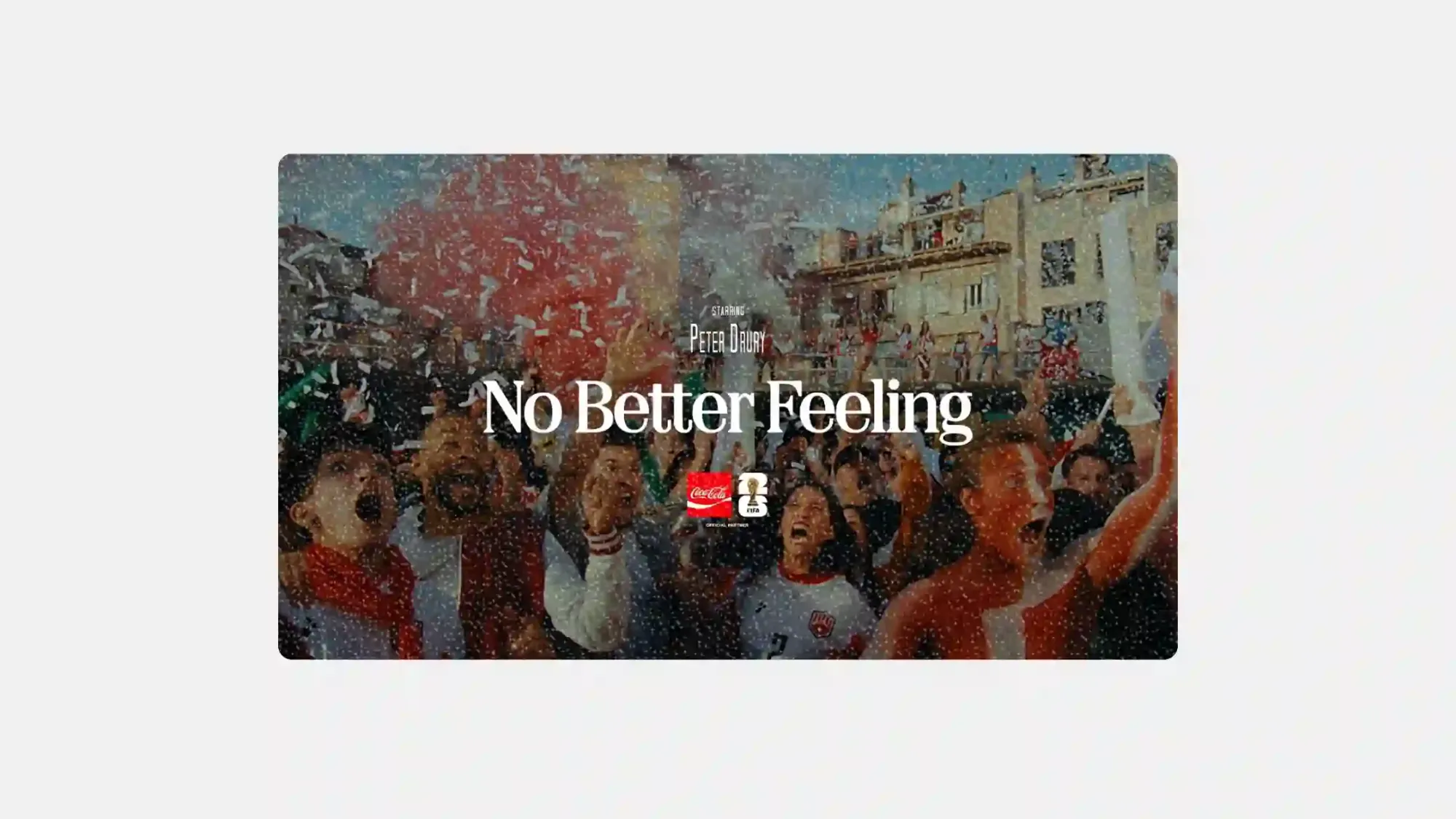
Coca-Cola does not sell carbonated beverages at the World Cup. It sells the feeling that carbonated beverages are present at the best moments of your life. This is a distinction the brand has maintained with remarkable consistency for four decades, and its 2026 World Cup campaign is the latest iteration of what is arguably the most durable emotional strategy in consumer marketing.
The campaign centers on a simple observation: the World Cup creates moments that strangers share. A goal scored in a bar in São Paulo is experienced collectively by people who have never met and will never meet again. Coca-Cola's advertising has always been drawn to these moments of accidental community, and the World Cup provides them in abundance.
What is technically impressive about the 2026 execution is the scale at which it personalizes this collective experience. Using real-time data from the tournament—scores, crowd reactions, social mentions—the brand activates market-specific content within minutes of significant moments. When Morocco scored against Spain in a group stage upset, Moroccan social channels had Coca-Cola content live within eight minutes that referenced the specific moment.
This is not new technology. Oreo's "Dunk in the Dark" during the 2013 Super Bowl established the template. But the scale and sophistication have increased significantly. The 2026 Coca-Cola operation involves 34 market teams, a centralized real-time content hub, and pre-approved creative assets that can be assembled and deployed without full creative review.
The strategic risk of this approach is that speed can undermine depth. Real-time content optimized for immediacy rarely achieves the emotional resonance of a campaign that had twelve months of creative development. Coca-Cola manages this risk by treating the real-time content as tactical amplification of a deeper brand platform, rather than as the platform itself.
The brand's emotional strategy at the World Cup is not manufactured. The moments it captures are genuine. But the professionalism with which it captures them—the production quality, the media placement, the speed of deployment—is anything but spontaneous. The campaign is canned emotion, expertly uncanned.
Whether this matters to consumers is an empirical question, and the answer appears to be: not much. Preference surveys conducted during the tournament show Coca-Cola consistently outperforming competitors on measures of "brand that understands the World Cup experience." The strategy works. The question of whether it is honest is largely academic.
Comments
Be the first to comment.
Sign in to leave a comment. Sign in